Understanding Ready Reckoner Rate: A Complete Guide for Property Buyers
Table of Contents
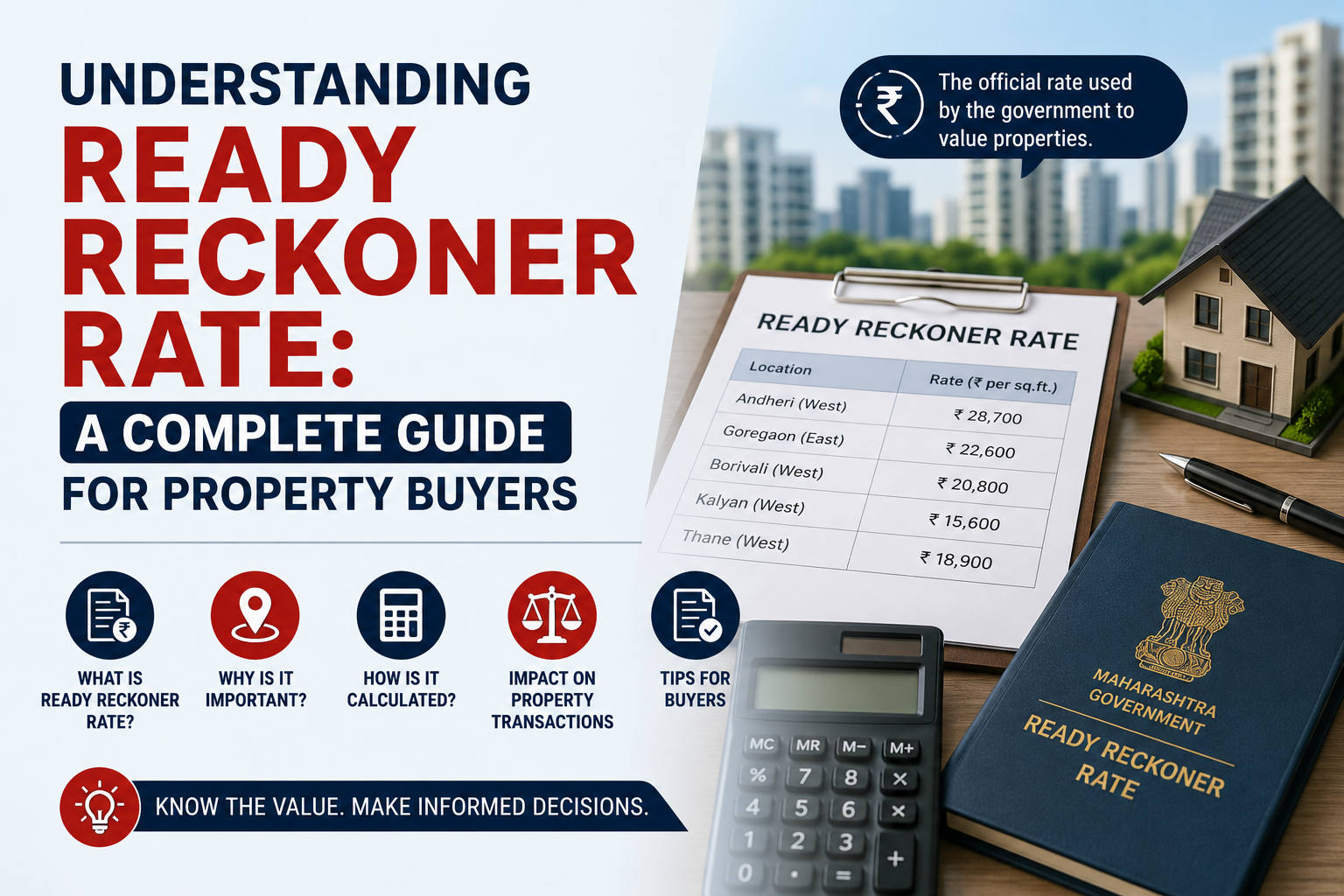
Making a property purchase is a big financial decision, and understanding how property valuation works is a must before making such a decision. One of the most important terms you will come across during such a decision-making process is “Ready Reckoner Rate,” or RRR. Whether you are a first-time buyer or looking to invest in a property, understanding how RRR works will help you avoid confusion. This article will help you in Understanding Ready Reckoner Rate: A Complete Guide for Property Buyers.
This is particularly significant in a city like Pune, which is known for its rapid growth.
What is the Ready Reckoner Rate?
The lowest amount at which a property can be lawfully registered is the Ready Reckoner Rate, sometimes referred to as the circle rate or guideline value. The state government sets this rate, which serves as a standard for real estate transactions.
To put it simply, the government will still compute stamp duty and registration fees using the Ready Reckoner Rate (RRR) even if the buyer and seller agree on a lower price.
Why does the Ready Reckoner Rate exist?
There are several uses for the Ready Reckoner Rate:
- It guarantees that real estate transactions are transparent.
- It assists the government in avoiding devaluation.
- It lessens the likelihood that black money will circulate.
- It unifies the cost of real estate in all areas.
For instance, the government will still use ₹50 lakh as the value for tax calculations if a property in Pune has a Ready Reckoner Rate of ₹50 lakh but is sold for ₹45 lakh.
How does the Ready Reckoner Rates Get Calculated?
Many people believe that these rates are set at random, but in actuality, they are determined by a thorough analysis and a number of influencing factors. Before establishing or changing these rates, the government researches market demand, infrastructure, and real estate trends.
The following are the main elements at play:
- Location and Connectivity
One of the biggest factors is the location itself. Areas closer to city centers, IT hubs, or major roads have higher Ready Reckoner Rates. Connectivity via highways, metro, and other transportation modes can also impact the valuation.
- Infrastructure Development
The availability of infrastructural facilities such as schools, hospitals, shopping complexes, and offices has a direct impact on the evaluation of the property. Naturally, more developed areas command higher rates.
- Type of Property
The Ready Reckoner Rate varies depending on the type of property:
- Residential Apartments
- Commercial Spaces
- Industrial Plots
- Agricultural Land
- Market Demand and Supply
If a certain area is in high demand, then the Ready Reckoner Rate is likely to increase. For example, IT corridors or business districts often see higher rates due to increased demand.
- Floor Level and Building Age
Sometimes, the floor level of a building and the age of a building can also come into play in determining a rate.
- Government Policies and Future Development
Metro expansions, highways, and smart city initiatives (all planned infrastructure projects) can cause increases in Ready Reckoner Rates because the Government is planning for future growth when setting these rates.
- Periodic Updating of RR Rates
On a yearly basis, Ready Reckoner Rates are revised regularly to reflect current conditions in the marketplace. However, in times of economic difficulty, the Government can decide not to revise the rates even if they have been revised previously.
Areawise Ready Reckoner Rate in Pune
One of India’s most rapidly expanding real estate markets is located in Pune, which is being fuelled by an abundance of IT hubs and educational institutions, as well as improved infrastructure. Additionally, the location of property directly affects its Ready Reckoner rate.
Here are a few examples of some of the most expensive parts of Pune:
- Premium Areas
Examples of very high value areas include:
- Koregaon Park
- Kalyani Nagar
- Baner
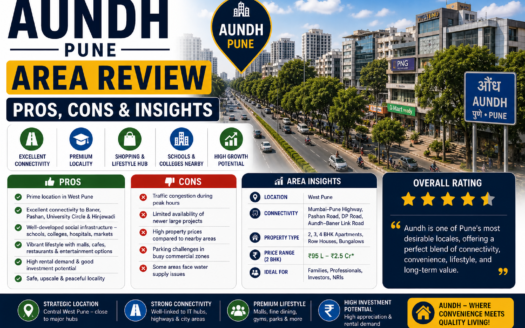
- Aundh
The high ready reckoner rates in these areas can be attributed to their:
- Prime location
- Close proximity to IT parks and other business hubs
- High-quality infrastructure and lifestyle
- Commercial and IT Centers
Some examples of these areas where there is great demand for tech businesses and job creation are:
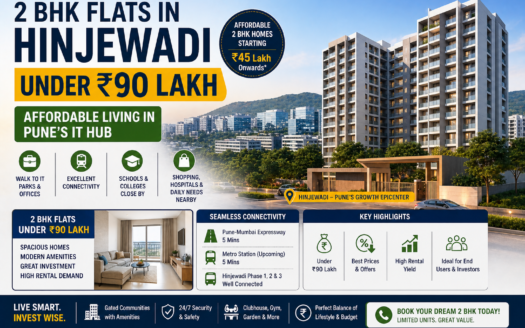
- Hinjewadi
- Kharadi
- Magarpatta
- Wakad
Due to this great demand the Ready Reckoner Rates continue to stampede on the upward trend.
- Mid-Range Residential Areas
Examples of these neighborhoods include:
- Hadapsar
- Pimpri-Chinchwad
- Dhanori
- Vishrantwadi
Mid-tier neighborhoods are typically very attractive to middle-class buyers because they provide affordable housing options as well as solid connectivity.
- Reasonable & Expanding Neighborhoods
Examples of these neighborhoods include:
- Narayangaon
- Talegaon
- Chakan
These are generally lower cost to build and currently do not have high expectations for development but are projected to be developed quickly and have long-term value because of new infrastructure and industry development.
Why Ready Reckoner Rate Matters for Buyers and Sellers?
How Understanding Ready Reckoner Rates affects your Financial Planning is critical & Not just technical:
- Stamp Duty Calculation
Stamp Duty is charged based on either the transaction value (if more than Ready Reckoner Rate) or the Ready Reckoner Rate (if less than transaction value) whichever is higher.
- Loan Approval
Banks will almost always take into consideration the Ready Reckoner rate when determining property value for the purpose of Home Loans
- Reducing Legal Issues
Registering your property lower than the Ready Reckoner Rate could result in penalties or legal consequences.
- Better Negotiating
Knowledge of RRR will allow buyers the ability to better negotiate and help avoid overpaying for the property they purchase.
What is the Difference Between the Market Rate and the Ready Reckoner Rate?
Many individuals mix up the two phrases, even though they’re not synonymous:
- Market Rate: This is the realistic price of exchanging property.
- Ready Reckoner Rate: Minimum amount as stated by the government
In most cases:
- Market rate ≥ Ready Reckoner Rate
However, in slower markets, the market rate can sometimes be close to or even slightly below the RRR.
Conclusion for Understanding Ready Reckoner Rate: A Complete Guide for Property Buyers :
Every buyer, seller, or investor participating in a real estate transaction should have an understanding of the Ready Reckoner Rate, as this will determine both the legal value of a property, as well as the overall cost of the transaction.
If you are planning to invest in Pune or nearby areas, always take time to:
- Verify the Ready Reckoner Rate
- Compare it against the current market value
- Evaluate how the growth potential of a property will impact your decision about buying.
These three actions will help provide you with an informed decision and a financially viable investment.