What is FSI in Real Estate? Understand with Example
Table of Contents
While venturing into property investment or starting a real estate development project in India, one of the key terms you will encounter is What is FSI in Real Estate India. Regardless of whether you are purchasing a home, investing, or developing, having a grasp of FSI will help you determine the extent of construction permitted on a piece of land.
Many individuals purchase properties without fully comprehending what FSI is, how it influences building height, or the way it determines property prices. Put simply, FSI is a regulator of the maximum permissible built up area on a given plot of land.
What is FSI Full Form in Real Estate?
Here we will briefly introduce the floor space index explained, show how FSI calculates real estate, and from experience, give the difference between FAR vs FSI India.
What is FSI in Real Estate?
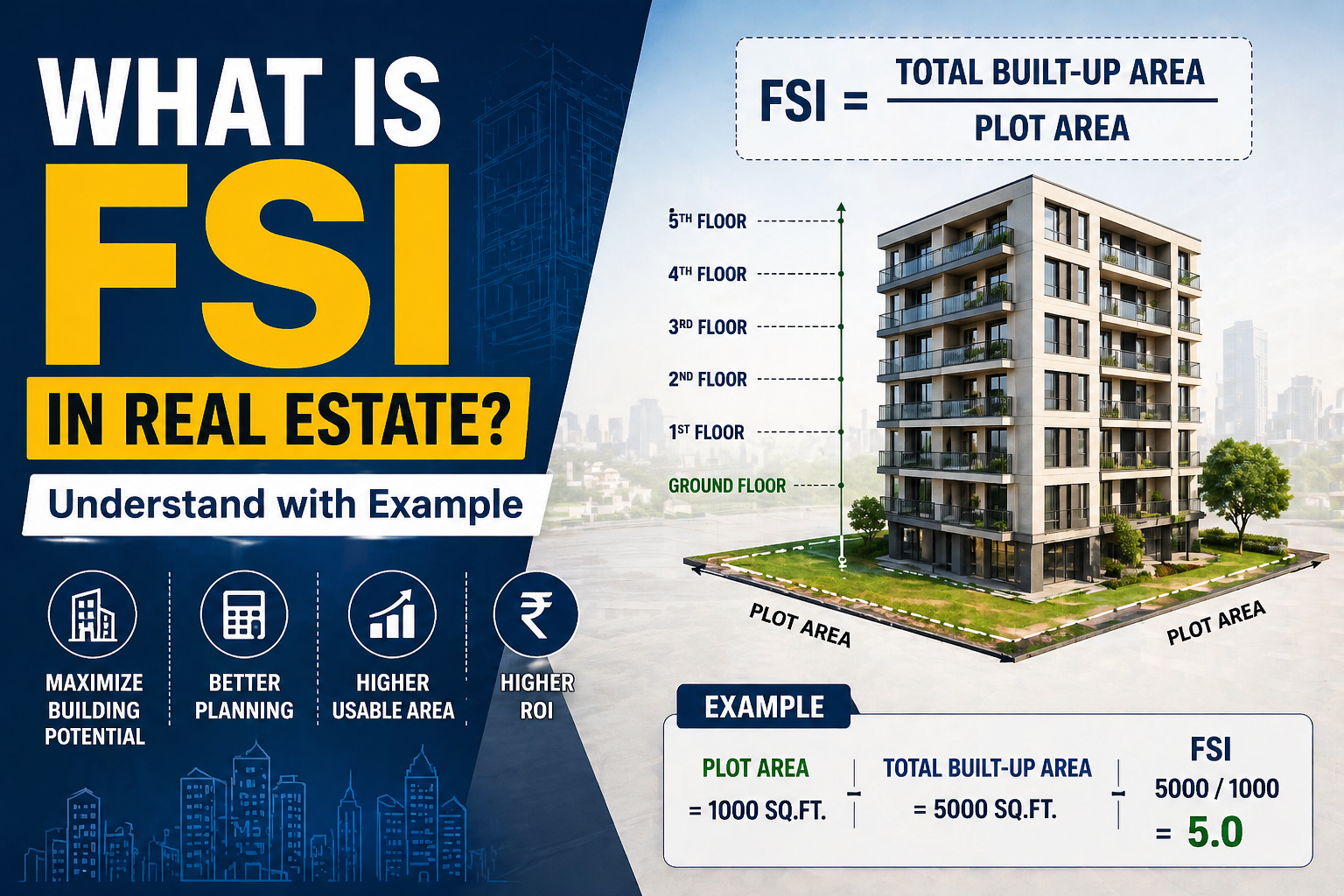
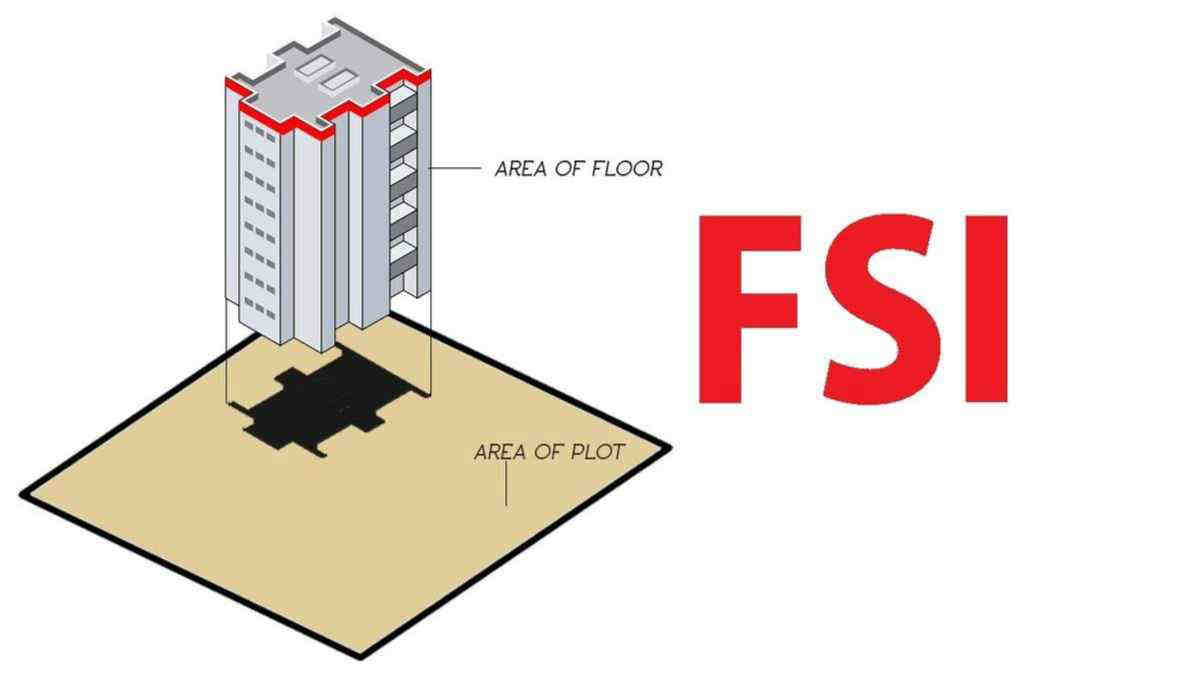
FSI (Floor Space Index) represents the ratio of total edifice construction (built-up area) as compared with that of the plot of land (developable area) upon which it is located. Simply put, it is a measurement that indicates how much construction (as permitted by the municipality) can legally take place on a given parcel of real estate.
FSI is computed based on the FSI formula:
FSI = Built-up Area / Plot Area
The FSI value is set by the local municipality and urban planning departments and varies by:
- City planning rules
- Road width
- Infrastructure capacity
- Location of the property
- Type of development (residential or commercial)
In exploring major Indian cities such as Pune, Mumbai, and Bangalore, real estate FSI norms might show a considerable variation from one locality to another within the same city.
Floor Space Index Explained in Simple Terms
In order for you to better understand the explanation of the Floor Space Index (FSI), one could think of the FSI as a rule that controls the amount of density based around the construction density in a specific area or city.
If the FSI is higher, this may determine:
- Increased height of structures.
- Increased number of floors.
- Higher levels of population density.
On the other hand, if the FSI is lower, this may determine:
- Fewer number of floors.
- Greater amount of open space.
- Lower density of construction.
Governments will utilize FSI regulations Maintains the proper balance between infrastructure (ie. roads, sewer systems, water supply), managing traffic, etc.
For example, commercial centres and city centres tend to have much higher FSI in comparison to most suburban residential areas.
FSI Example in India (Simple Calculation)
The site’s size is 1,000 square feet. FSI is allowed to be 1.5 times the size of the lot.
The total building area is:
1,000 sq. ft.x 1.5 = 1,500 sq. ft.
This means the developer has 1,500 sq. ft. of total construction available on this site.
This can be delivered in the following ways:
- One building with 1,500 sq ft.
- Two buildings, each with 750 sq ft.
- Three buildings, each with 500 sq ft.
The total construction area cannot be greater than 1,500 sq. ft.
Example 2 (Apartment Building)
Apartment Building (Example No. 2)
Plot size = 2000m2
FSI = 2.0
Total constructed area :
2000m2 * 2 = 4000m2
Therefore, Developer can construct:
- 4000m2 => 4 floors of each 1000m2
- 4000m2 => 8 floors of each 500m2
But total construction is capped at 4000m2
This example demonstrates the application of real estate FSI calculations during actual development.
Factors That Affect FSI in India
Municipal authorities make all the rules regarding the factors that decide FSI in the Indian real estate sector.
1. One of the factors is Road Width
Roads with larger widths generally get higher FSI allowances as they will be able to carry the increased vehicular traffic and populace resulting from the higher density permitted by the FSI.
2. Another factor is the Location of the Property
Areas that are central and prime to a city or main streets are the ones that provide a higher FSI.
3. Infrastructure Availability
If a locality is very well equipped with facilities like a metro system, expressways, and good water supply, then the authorities might grant higher FSI.
4. Zoning Regulations
Based on the types of zones (residential commercial industrial), the FSI limits are different.
5. Redevelopment Projects is another factor
Even though these are limited to particular areas, urban redevelopment schemes typically permit extra FSI as an incentive for redevelopment.
FAR vs FSI India – What’s the Difference?
Many people confuse FAR vs FSI India, but the concept is essentially the same.
| Term | Meaning |
| FSI | Floor Space Index |
| FAR | Floor Area Ratio |
FSI and FAR both denote the ratio of built-up to site area
They are just different terms:
- India calls this FSI
- The rest of the world calls this FAR.
For example:
If FAR = 2.0, this equals FSI at 2.0.
When comparing FAR and FSI in India, keep in mind they provide the same measurement.
Why FSI is Important in Real Estate?
Understanding FSI in real estate India is a crucial part of the knowledge for a number of reasons.
1. Determines Property Value : Land with higher FSI potential generally enjoys a premium market value since it allows more construction.
2. Affects Building Height : FSI is one of the factors that limit the height of buildings in an area.
3. Influences City Development: Urban planners often use FSI as a lever to balance population density with infrastructure capacity.
4. Helps Developers Plan Projects : Builders pay close attention to FSI numbers when they blueprint residential and commercial complexes.
5. Impacts Property Prices : A bigger FSI means more units can be packed into a project, which might push down prices on a per unit basis.
Premium FSI and Additional FSI
Developers in some cities can buy Premium FSI, which is extra FSI that allows construction above the base limits at an additional cost to the municipality.
This is prevalent among cities where land is in great demand, such as:
- Mumbai
- Pune
- Bangalore
- Hyderabad
By offering Premium FSI, cities can continue to grow up instead of out.
FSI in Pune Real Estate (Example)
FSI refers to an area’s permissible building density based on current population and building safety codes. In cities such as Pune, these densities vary by neighbourhood and the amount of existing infrastructure.
For example:
- FSI for the centre of a city could range from 1.5 to 2.0.
- For metro transit corridors, it could be greater than that.
- Redevelopment could yield additional FSI allowances.
Therefore, developers frequently seek out growth corridors or infrastructure areas where greater construction densities are available.
Conclusion :
Understanding FSI in real estate India is crucial for anyone dealing with property investment or development. It determines the amount of construction that one can undertake on a piece of land, and it also directly affects the price of a property, the height of a building, and the profitability of a project.
The explanation of the Floor space index and the FSI example India demonstrate that FSI is greatly influencing the development of the cities. It is necessary that you know the FSI calculation of real estate if you are assessing land, purchasing flats, or investing in real estate as it will guide you in making more informed decisions.
Moreover, when you are comparing FAR vs FSI India, it is good to remember that both terms are used interchangeably to denote the concept of the ratio of the total built up area to the plot area.
With the expansion of Indian cities and the improvement of the infrastructure, FSI will continue to be one of the major determinants of real estate development.