How RBI Repo Rate Affects Home Loan EMI (With Example)
Table of Contents
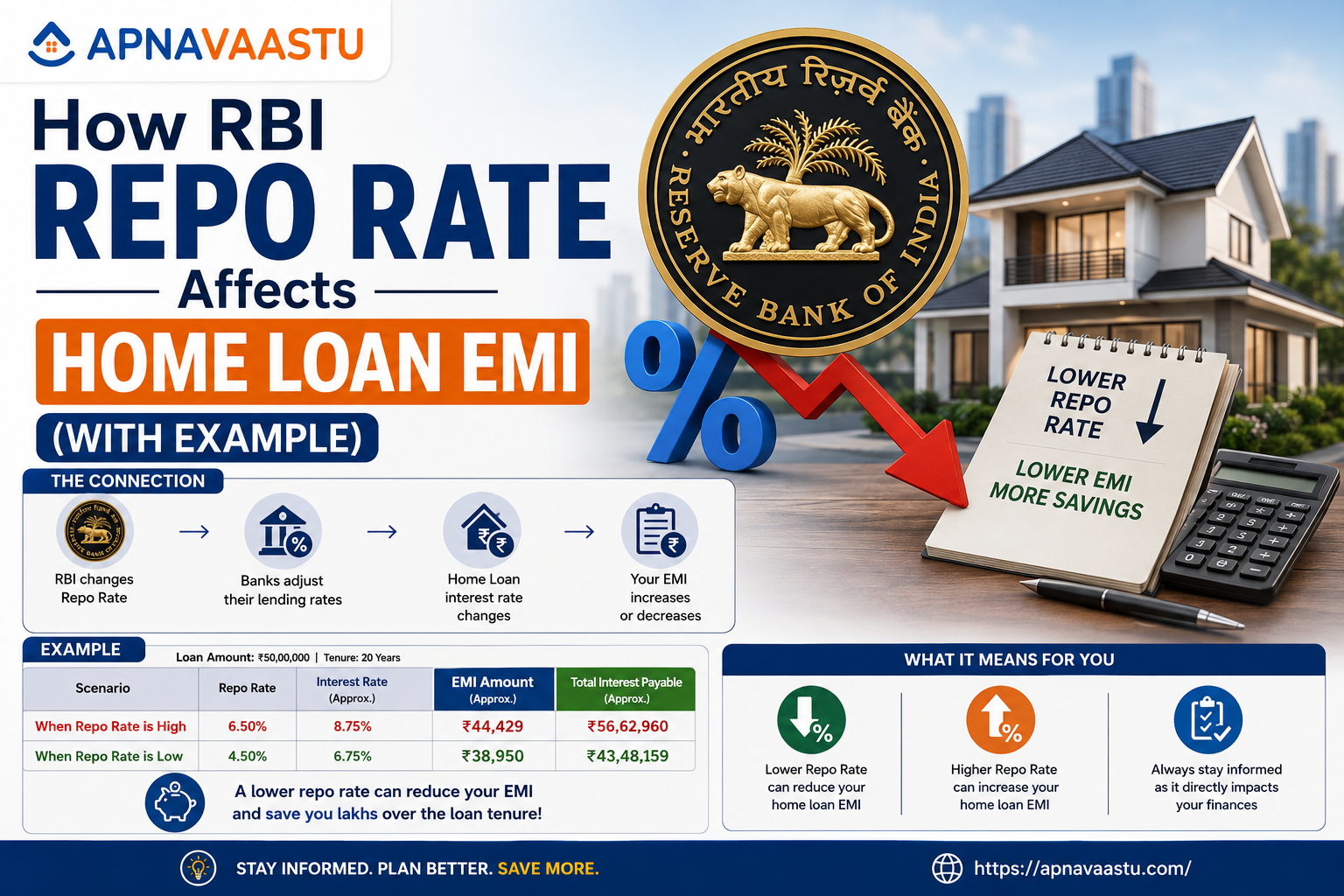
The interest rates on home loans in India are also heavily impacted by the level of repo rate fixed by the Reserve Bank of India. This rate has influenced ever since.
This article helps in explaining the repo rate home loan EMI relationship. It also shows how the changes affect the borrowers and explains the same with a detailed example.
What Is the RBI Repo Rate?
Repo Rate is the interest rate at which the RBI provides money to commercial banks.
Functional Role:
- Regulation of Liquidity by RBI
- Banks borrow money from the RBI at the repo rate
- Banks lend money to people at a higher rate
Thus, changes in Repo Rates affect Lending Rates.
Repo Rate Home Loan EMI Connection Explained
Currently, the majority of home loans in India are benchmarked against external factors like repo rate, through the Repo Linked Lending Rate (RLLR).
Transmission Process:
- Change in repo rate by RBI
- Banks modify interest rates
- Interest rates on home loans are affected
- Modification in EMIs or Tenure
The above mechanism is faster in transmitting the changes in monetary policies to the end-user.
How Repo Rate Affects EMI
The effect of a change in repo rate depends on the direction of movement:
Increase in Repo Rate
- Interest rates increase
- EMI increases, or the period gets extended
- Total interest paid increases
Decrease in Repo Rate
- Interest rates fall
- EMI decreases, or the period gets shortened
- Borrowing is easier
EMI Calculation Formula
EMI calculation for home loans follows a standard formula:
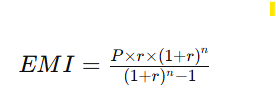
In which:
- P = Amount of the principal loan
- r = Interest rate per month
- n = Tenure of the loan in months
A small variation in interest rates can greatly affect EMI due to compounding.
Example: RBI Repo Rate Impact on EMI
Loan Information:
- Loan Amount: ₹50,00,000
- Tenure: 20 Years
- Interest Rate at Start: 8%
Case 1: Interest Rate Goes Up to 9%
- EMI becomes ₹44,986
- Increased Monthly Expense by ₹3,164
Case 2: Interest Rate Falls to 7%
- EMI reduces to approximately ₹38,765
- Monthly savings of ₹3,057
Key Insight:
A 1% change in interest rate can result in a difference of several lakhs over the loan tenure.
What Happens to EMI When Repo Rate Increases?
The bank generally considers one of the following two scenarios:
1. Increased EMI
- The outflow each month goes up
- Tenure stays the same
2. Increased Loan Tenure
- EMI stays constant
- Tenure is extended
Usually, the tenure is modified first, and then the EMI.
Floating vs Fixed Rate Loans
Floating Rate Loans:
- Closely tied to the repo rate
- EMI varies according to market performance
- Highly favored owing to clarity
Fixed Rate Loans:
- EMI is fixed
- Unaffected by repo rate adjustments
- Usually provided at higher interest rates
RBI Repo Rate Impact on Real Estate Buyers
Fluctuations in repo rates affect property affordability and market sentiment.
Low Repo Rates Scenario:
- Decreased EMI burden
- Increased purchasing power
- Increased demand for properties
High Repo Rates Scenario:
- Increased borrowing cost
- Decreased affordability
- Possibility of slower demand
Strategic Insights for Borrowers
Rising Interest Rate Cycle:
- Go for prudent loan sizes
- Prefer partial repayments
- Avoid lengthy tenures when not essential
Falling Interest Rate Cycle:
- Look into refinancing and balance transfer
- Avail lower EMI charges
- Review payment options
Additional Factors Affecting EMI
Other considerations in addition to repo rates for calculating EMIs on housing loans include:
- The bank’s margin above the repo rate
- The credit score of the borrower
- The loan period
- Whether the loan attracts a fixed or a floating interest rate
Risk Management Tips
For effective EMI management:
- Keep a sufficient liquidity reserve (6-12 months’ EMI)
- Stay abreast of RBI policies
- Go for banks with clear interest rate structures
- Don’t over-leverage
Final Analysis
The influence of the repo rate on EMI in home loans by the RBI is immediate and highly impactful, particularly in the case of the repo-linked lending structure.
Takeaways:
- RBI’s repo rate rise results in higher EMI or increased tenure
- Lowering the repo rate lowers the cost of borrowing
- Floating interest loans are most impacted
- Slight shifts in the repo rate have major financial implications
FAQs
- What is the influence of the RBI repo rate on home loan EMI?
It impacts lending rates determined by banks, and hence affects EMI.
- If the repo rate goes up, what will happen to EMI?
It will result in either an increase in EMI or a prolongation of the loan duration.
- What is the relationship between the repo rate and the home loan?
Repo rate specifies the interest at which banks can borrow money, thus affecting home loans.
- Are repo rate-linked home loans good?
Yes, they offer rate transparency and fast rate adjustment, but have market risk associated with them.
Conclusion
The repo rate still remains one of the major players in deciding the home loan affordability in India. A better understanding of this factor can help a person to plan investments better.
Keeping track of RBI policy development trends and aligning the loan policies in accordance can greatly enhance the long-term financial gain.