Hadapsar on the Rise: Next Big Real Estate Investment Destination in Pune 2026
Table of Contents
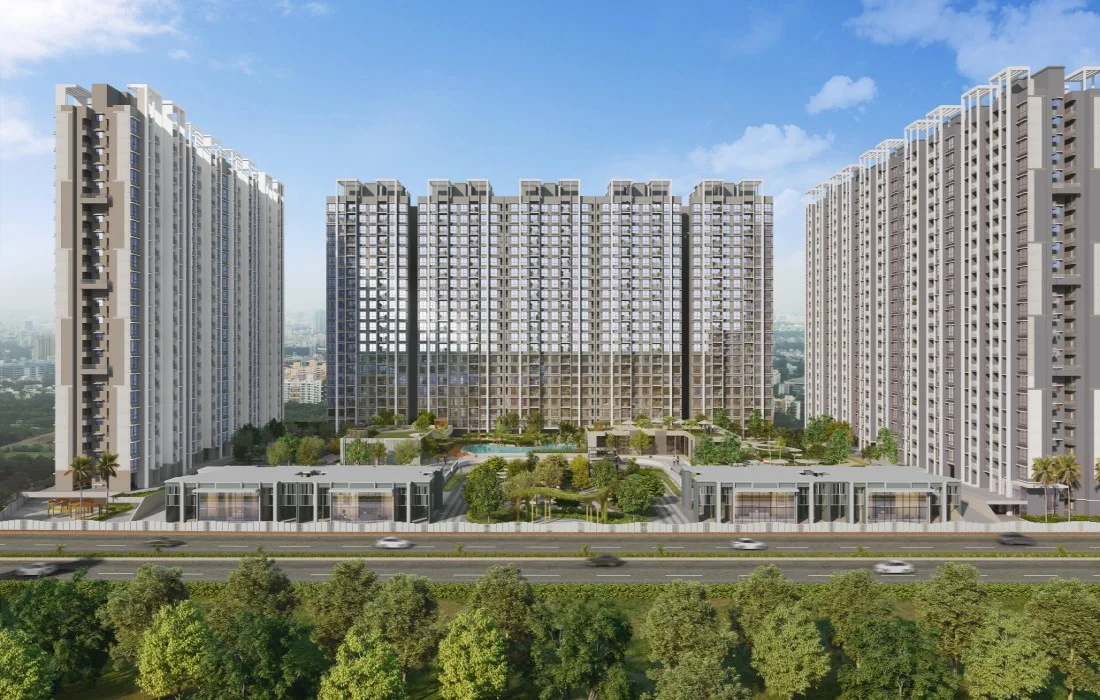
Hadapsar occupies an unusual position in Pune’s real estate story. It’s not a new corridor being discovered for the first time; Magarpatta City has anchored serious commercial and residential development here since the early 2000s. Yet Hadapsar keeps showing up in “next big destination” conversations year after year, which raises a fair question: is this genuinely still an emerging opportunity, or is it a mature market being re-marketed as emerging?
The honest answer, based on how the area has actually developed, is that Hadapsar is neither purely “next big thing” nor fully “already arrived” it’s a corridor in its second growth phase, where the original IT-and-township core (Magarpatta, Amanora) has matured, while several adjacent and connecting pockets (Handewadi Road, Mundhwa-Kharadi link areas, Fatima Nagar periphery) are now going through the growth phase Magarpatta itself went through fifteen years ago. Understanding which phase a specific micro-pocket within Hadapsar is in matters far more than treating “Hadapsar” as a single investment thesis, and that distinction is what most articles on this exact keyword miss.
The Hadapsar Growth Story: How This Corridor Got Here
Hadapsar’s transformation began in earnest with Magarpatta City, a large-scale integrated township developed on land pooled from local farming families, combining IT/ITES commercial space (Magarpatta Cybercity) with residential, retail, and educational infrastructure in a single planned development. This model proved influential; it demonstrated that Pune’s eastern corridor could support a self-contained employment-and-living ecosystem rather than depending entirely on the western IT corridor (Hinjewadi) for job creation.
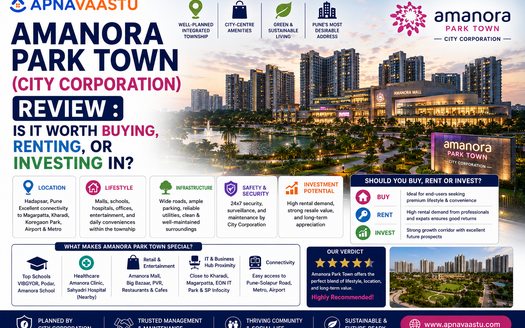
Amanora Park Town followed with a similar integrated township approach, further cementing Hadapsar’s identity as a planned, amenity-rich corridor rather than an organically developed one. This planning-led development pattern is a genuinely important differentiator: it means Hadapsar’s infrastructure (roads, drainage, green space) was substantially designed for its eventual density from the outset, rather than retrofitted after unplanned growth a structural advantage several of Pune’s more organically developed peripheral corridors don’t share.
What’s changed more recently is the corridor’s connectivity profile. Improvements along the Pune-Solapur highway stretch, the Hadapsar-Mundhwa-Kharadi link road development, and progress on metro connectivity plans affecting the broader Hadapsar-Swargate corridor have started extending Hadapsar’s practical commute radius, which is the mechanism actually driving the current wave of “Hadapsar is rising” coverage, more than any single dramatic announcement.
Why Hadapsar Is Being Called Pune’s Next Big Investment Destination in 2026
Four factors are converging here, and they’re worth separating individually rather than treating “Hadapsar is rising” as a single vague claim:
1. Diversified, established employment base. Unlike single-driver corridors dependent on one IT park, Hadapsar’s employment base spans IT/ITES (Magarpatta Cybercity, EON IT Park adjacency), commercial and retail (Amanora Mall and surrounding commercial development), and increasing connectivity to Pune’s eastern industrial and logistics activity. This diversification reduces the corridor’s vulnerability to a slowdown in any single sector, a meaningfully different risk profile than corridors built around one employment anchor.
2. Price positioning relative to comparable western corridors. Hadapsar continues to trade at a discount to similarly-positioned western Pune corridors like Baner and Viman Nagar, despite comparable or, in some pockets, superior social infrastructure maturity. This price gap is the core of the appreciation argument, but it only holds if the gap is closing over time due to genuine demand convergence rather than remaining permanently discounted for structural reasons (which is a distinction worth investigating locality by locality, addressed below).
3. Improving east-west and north-south connectivity. Hadapsar’s historical limitation was that it functioned somewhat as a self-contained pocket rather than being well-linked to Pune’s other major employment corridors. Ongoing road widening and link-road development connecting Hadapsar to Kharadi, Mundhwa, and the broader eastern corridor is directly addressing this limitation, which expands the practical commuting catchment for both residents and employers.
4. Institutional and social infrastructure maturity. Hadapsar already has established schools, hospitals, and retail infrastructure at a level that many “emerging” peripheral corridors take years to develop, meaning the corridor’s growth thesis doesn’t require waiting for social infrastructure to catch up the way it does in newer peripheral areas, which shortens the practical timeline for the appreciation thesis to play out.
Micro-Locality Breakdown: Hadapsar Isn’t One Market
This is the section most competing content on this exact keyword skips. Treating “Hadapsar” as a single homogeneous locality produces misleading investment conclusions, because the different pockets within and around Hadapsar are at meaningfully different maturity stages.
Magarpatta City
The most mature, established pocket within Hadapsar. Fully developed integrated township with premium positioning, strong resale liquidity, and rental demand anchored directly by on-site IT/ITES employment. Appreciation here is likely to be steady rather than dramatic;c this pocket has already captured much of its growth phase. Best suited for buyers prioritizing stability, liquidity, and immediate rental income over maximum appreciation upside.
Amanora Park Town and Surroundings
A similarly mature, planned township with strong retail and social infrastructure anchoring demand. Comparable investment profile to Magarpatta: established, liquid, steady rather than high-growth at this stage.
Handewadi Road
A genuinely earlier-stage growth pocket relative to the Magarpatta-Amanora core, benefiting from proximity to the established core while offering lower entry pricing meaningfully. This is arguably the pocket within greater Hadapsar with the strongest remaining appreciation runway, precisely because its price hasn’t yet converged with the mature core despite improving connectivity. The tradeoff: social infrastructure here is less developed than the core, and buyers should verify current road and utility infrastructure completion status specifically for this stretch rather than assuming it matches the maturity of Magarpatta.
Fatima Nagar and Wanowrie-Adjacent Pockets
An older, more centrally located residential pocket adjacent to Hadapsar with a different character:r more established resale stock, less new large-scale development, and a growth case built more around infill redevelopment potential than greenfield appreciation. This suits a different investor profile: those interested in redevelopment or older-society reinvestment plays rather than new-project appreciation bets.
Mundhwa-Kharadi Link Corridor
Technically at the boundary of Hadapsar and Kharadi’s zones of influence, this stretch is benefiting from both corridors’ demand simultaneously as link-road connectivity improves. This dual-catchment effect is a distinct advantage; it’s less dependent on Hadapsar’s standalone growth story and more insulated by pulling demand from two established employment bases at once.
Practical takeaway from this breakdown: if your investment thesis is “buy in Hadapsar for appreciation,” the pocket you actually choose changes the risk and return profile substantially. Handewadi Road and the Mundhwa-Kharadi link corridor currently offer more genuine appreciation runway than the already-mature Magarpatta-Amanora core, which is better suited to stability and yield than aggressive growth.
Hadapsar vs. Peer Investment Corridors: An Honest Comparison
A ranking article about Hadapsar isn’t credible without directly comparing it to the corridors it’s most often positioned against.
| Factor | Hadapsar | Kharadi | Wakad/Hinjewadi Belt |
| Employment base diversification | High (IT + retail/commercial + logistics adjacency) | Moderate-High (largely IT/ITES concentrated) | Moderate (heavily IT-concentrated) |
| Social infrastructure maturity | High, especially in core pockets | High | High |
| Current price relative to core-corridor peers | Moderate discount | Approaching parity with premium corridors | Premium in core pockets |
| Connectivity trajectory | Actively improving (link roads, metro plans) | Already strong | Already strong, some congestion pressure |
| Micro-locality variance within the corridor | High — mature core vs. early-stage periphery | Moderate | Moderate-High |
| Best-suited investor profile | Buyers wanting diversified risk with remaining price-gap upside | Buyers wanting strong, established IT-driven demand | Buyers prioritizing maximum current liquidity over growth upside |
Where Hadapsar genuinely wins: employment diversification is its strongest structural advantage — it’s less exposed to a pure-IT sector slowdown than Kharadi or the Hinjewadi belt, because its commercial and retail base isn’t solely dependent on IT/ITES leasing demand.
Where the comparison is more nuanced than promotional content suggests: Kharadi’s IT/ITES base is larger and more internationally diversified in terms of tenant companies, which some investors view as a more resilient long-term demand driver than Hadapsar’s more domestically-oriented commercial mix. This is a genuine trade-off, not a clear win for either corridor.
Rental Market Dynamics in Hadapsar
Hadapsar’s rental demand is anchored by a combination of IT/ITES employees working within Magarpatta Cybercity and nearby commercial developments, along with growing demand from Amanora’s retail and commercial workforce. This gives the rental market somewhat more diversification than corridors dependent purely on a single IT park’s hiring cycle.
Practical rental yield expectations: gross rental yields for well-located 2BHK units in the established Magarpatta-Amanora core typically sit in a range broadly consistent with Pune’s citywide average for comparable IT-adjacent corridors (roughly 2.5%–4% gross), while units in earlier-stage pockets like Handewadi Road may currently show somewhat lower yields until local employment density and tenant demand mature further an important expectation-setting distinction investors should factor in rather than assuming uniform yield across all of “Hadapsar.”
Infrastructure Projects Investors Should Track
Rather than vaguely citing “upcoming infrastructure,” here’s what specifically drives Hadapsar’s forward appreciation case, and what to verify before treating it as confirmed:
- Hadapsar-Mundhwa-Kharadi link road development: directly expands Hadapsar’s practical commuting catchment toward Kharadi’s employment base. Verify current construction completion status rather than relying on original announcement timelines, since road infrastructure projects in this corridor have historically seen phased, extended rollouts.
- Pune-Solapur highway corridor improvements: affect connectivity for the southeastern Hadapsar stretch, including areas near Handewadi Road.
- Metro connectivity plans affecting the broader Hadapsar-Swargate-central Pune corridor: would meaningfully improve Hadapsar’s connectivity to central Pune if completed on schedule; this is a “verify before you rely on it” infrastructure trigger rather than a confirmed near-term catalyst, given the general pattern of metro timeline extensions across Pune’s network.
- Continued commercial and retail development around Amanora and adjacent stretches: incremental but steady, supporting continued rental and end-user demand rather than functioning as a single dramatic trigger.
Risks Specific to Investing in Hadapsar
- Micro-locality confusion risk: the single biggest risk to an investor is treating all of Hadapsar as equally positioned, when the maturity and appreciation runway differ substantially between pockets like Magarpatta and Handewadi Road, as detailed above.
- Traffic and congestion pressure: as Hadapsar’s core has matured and densified, certain stretches,s particularly near Magarpatta and Amanora during peak commute hours, have experienced congestion pressure that partially offsets the connectivity advantage the corridor is known for. This is worth experiencing firsthand at peak hours before committing, not just evaluating from a map.
- Price convergence limits: while Hadapsar trades at a discount to some western corridors, that discount may partly reflect genuine, durable differences (brand perception, specific employer concentration) rather than a temporary gap destined to close; investors should be honest about which portion of the “discount” is actually closeable.
- Infrastructure timeline risk: as with most Pune corridors, link-road and metro-related triggers have a track record of phased delays; build a buffer into any appreciation timeline modeled around these projects.
Who Should and Shouldn’t Prioritize Hadapsar
Good fit:
- Investors wanting employment-sector diversification rather than pure IT-park dependency
- Buyers who value established social infrastructure and want to avoid the multi-year wait that newer peripheral corridors require
- End-users wanting a planned-township living experience (Magarpatta, Amanora) with strong existing amenities
- Investors specifically targeting the Handewadi Road or Mundhwa-Kharadi link pockets for genuine remaining appreciation runway, who are willing to accept a longer horizon and currently thinner liquidity in those specific stretches
Less ideal fit:
- Investors seeking maximum near-term appreciation from the most established Magarpatta-Amanora core; specifically,y that phase of growth has substantially already occurred
- Buyers unwilling to differentiate between Hadapsar’s micro-pockets, who risk applying a “core Hadapsar” liquidity and maturity assumption to an early-stage peripheral stretch that doesn’t yet support it
Frequently Asked Questions
Is Hadapsar still a good investment in 2026, or has its growth phase already passed? It depends heavily on which pocket within Hadapsar you’re evaluating. The Magarpatta-Amanora core has largely realized its dramatic growth phase and now offers steadier, more moderate appreciation with strong liquidity. Peripheral pockets like Handewadi Road and the Mundhwa-Kharadi link corridor retain meaningfully more appreciation runway, with correspondingly higher risk and longer horizons required.
What makes Hadapsar different from Kharadi or Wakad as an investment corridor? Hadapsar’s key differentiator is employment base diversification: its commercial and retail base isn’t as narrowly dependent on IT/ITES leasing demand as Kharadi or the Hinjewadi belt, which can offer more resilience against sector-specific slowdowns, though Kharadi’s larger and more internationally diversified IT tenant base is a genuine counterpoint worth weighing.
What is a realistic rental yield to expect in Hadapsar? Established pockets like Magarpatta and Amanora typically deliver gross rental yields broadly in line with Pune’s citywide average for IT-adjacent corridors (roughly 2.5%–4%), while newer pockets like Handewadi Road may currently show somewhat lower yields pending further tenant demand maturity.
Which part of Hadapsar has the most appreciation potential right now? Based on current price-gap and infrastructure-trigger analysis, Handewadi Road and the Mundhwa-Kharadi link corridor currently offer the strongest remaining appreciation runway within greater Hadapsar, precisely because they haven’t yet converged toward the established Magarpatta-Amanora core’s pricing.
What’s the biggest risk to watch when investing in Hadapsar? Treating all of Hadapsar as a single, homogeneous investment thesis is the most common and costly mistake. The corridor’s different pockets are at genuinely different maturity stages, and applying core-area liquidity and appreciation assumptions to an early-stage peripheral stretch can lead to unrealistic return expectations.
Final Takeaway
Hadapsar’s “next big destination” narrative holds up under scrutiny, but not as a single, uniform claim about the entire corridor. The area’s genuine advantage is employment diversification and already-mature social infrastructure, paired with a connectivity upgrade that’s actively underway rather than merely proposed. The real investment decision isn’t whether to invest in Hadapsar — it’s which pocket within Hadapsar matches your actual risk tolerance and holding horizon: the stability and liquidity of the established Magarpatta-Amanora core, or the higher-risk, higher-runway appreciation case building in Handewadi Road and the Mundhwa-Kharadi link corridor. Investors who make that distinction deliberately are positioned to benefit from Hadapsar’s continued rise; those who treat it as one undifferentiated market risk are misjudging both the timeline and the return profile they’re actually buying into.